
Sports Physiotherapy in East Coast Singapore: Recover Faster From Sports Injuries

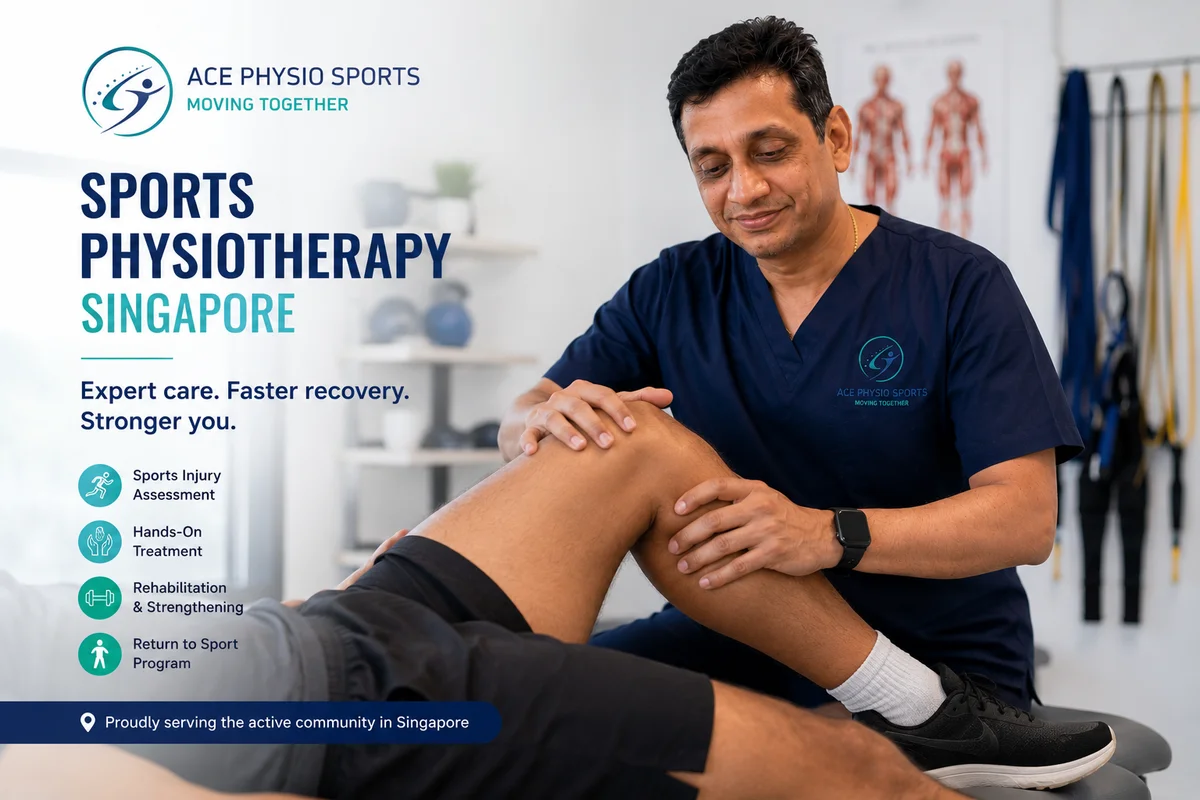
Sports Physiotherapy in East Coast Singapore: Recover Faster From Sports Injuries
Whether you're training for a marathon, playing tennis on the weekends, cycling along East Coast Park, or simply trying to stay active and healthy, injuries can quickly disrupt your routine and affect your confidence.
One of the most common frustrations we hear from patients is not just the pain itself, but the uncertainty that follows. How long will recovery take? Is it safe to continue exercising? Will the injury keep coming back?
At ACE Physio Sports, we work with athletes and active individuals across East Coast Singapore, including Katong, Marine Parade, Joo Chiat, Siglap, Bedok, and surrounding neighbourhoods. Our goal is not simply to help patients recover from injury, but to understand why the injury happened and help prevent it from happening again.
What Is Sports Physiotherapy?
Sports physiotherapy is a specialised area of physiotherapy focused on preventing, assessing, treating, and rehabilitating sports-related injuries.
Contrary to popular belief, sports physiotherapy is not only for professional athletes.
Many of our patients are:
- Recreational runners
- Gym-goers
- Cyclists
- Football players
- Tennis and badminton players
- Golfers
- Active adults who exercise regularly
Anyone who participates in physical activity can benefit from sports physiotherapy when pain, injury, or movement limitations begin affecting performance or daily life.
Common Sports Injuries We Treat
Sports injuries can affect muscles, tendons, ligaments, joints, and nerves.
Some of the most common conditions we see include:
Knee Injuries
The knee experiences significant loading during running, jumping, and change-of-direction sports.
Common examples include:
- Runner's knee
- Patellar tendon pain
- Ligament sprains
- Meniscus-related injuries
Shoulder Injuries
Shoulder pain is common among swimmers, gym enthusiasts, tennis players, and individuals involved in overhead activities.
Symptoms may include:
- Pain during lifting
- Reduced mobility
- Weakness
- Clicking or instability
Back and Neck Pain
Sports-related back and neck pain can develop due to training errors, poor movement mechanics, muscle imbalances, or inadequate recovery.
These issues often become persistent if underlying causes are not addressed.
Muscle Strains
Hamstring, calf, quadriceps, and groin strains frequently occur in running and field sports.
Without proper rehabilitation, re-injury rates can be surprisingly high.
Tendon Injuries
Tendon problems often develop gradually over time.
Examples include:
- Achilles tendon pain
- Patellar tendinopathy
- Tennis elbow
- Golfer's elbow
Why Do Sports Injuries Keep Returning?
Many injuries do not occur because the body is weak.
Instead, injuries often result from a combination of factors, including:
- Training load changes
- Poor recovery
- Mobility restrictions
- Movement inefficiencies
- Previous injuries
- Strength deficits
- Biomechanical factors
Pain is often the final warning sign rather than the original problem.
This is why temporary symptom relief alone rarely provides a long-term solution.
How Sports Physiotherapy Helps
Effective rehabilitation goes beyond reducing pain.
At ACE Physio Sports, we focus on helping patients understand their injury, improve movement quality, rebuild strength, and return to activity safely.
Detailed Assessment
Every rehabilitation programme begins with a comprehensive assessment.
We evaluate:
- Injury history
- Training habits
- Movement patterns
- Strength deficits
- Flexibility limitations
- Running or sporting demands
Understanding the root cause allows treatment to be tailored to the individual.
Hands-On Treatment
Depending on the condition, treatment may include:
- Manual therapy
- Joint mobilisation
- Soft tissue release
- Dry needling
- Mobility restoration techniques
These approaches can help reduce pain and improve movement during the early stages of recovery.
Progressive Rehabilitation
Rehabilitation is where long-term success is built.
Treatment plans often include:
- Strength training
- Stability exercises
- Mobility work
- Balance training
- Sport-specific rehabilitation
The objective is not simply to return to activity, but to return stronger and more resilient.
A Real Recovery Story
One patient from Marine Parade came to our clinic after struggling with recurring knee pain while training for a long-distance running event.
Despite resting multiple times, the pain continued to return whenever training volume increased.
During assessment, Vineet Bansal identified several contributing factors, including reduced hip strength, running mechanics that increased stress on the knee, and training progression that exceeded the body's recovery capacity.
A structured rehabilitation programme was developed focusing on:
- Strength development
- Running load management
- Movement retraining
- Progressive return-to-running strategies
Over the following weeks, the patient gradually returned to training with significantly reduced symptoms and greater confidence.
Most importantly, they gained a better understanding of how to manage training loads and reduce future injury risk.
Why Early Treatment Matters
Many active individuals continue training through pain because they do not want to lose progress.
While this approach may sometimes work for minor discomfort, persistent symptoms often become more difficult to manage when ignored.
Seeking treatment early can help:
- Reduce recovery time
- Prevent compensation patterns
- Minimise performance decline
- Lower the risk of chronic problems
- Improve confidence during recovery
Early intervention often means spending less time away from the activities you enjoy.
Sports Physiotherapy for Active Adults
You do not need to be a competitive athlete to benefit from sports physiotherapy.
Many of our patients simply want to:
- Return to gym training
- Play with their children comfortably
- Complete a 10K run
- Stay active without recurring pain
- Maintain long-term health and mobility
Rehabilitation should be tailored to your goals, lifestyle, and activity level.
Why Patients Choose ACE Physio Sports
Patients from East Coast Singapore choose ACE Physio Sports because of our personalised, evidence-based approach to rehabilitation.
We regularly work with patients from:
- Katong
- Marine Parade
- Joo Chiat
- Siglap
- Bedok
- East Coast Road
Our focus is not simply treating symptoms. We aim to identify the underlying factors contributing to injury and build a rehabilitation plan that supports lasting recovery.
Final Thoughts
Sports injuries can be frustrating, but they do not have to define your activity levels or performance.
With the right assessment, targeted treatment, and structured rehabilitation plan, most injuries can be managed effectively while reducing the likelihood of future recurrence.
Whether you are dealing with a recent sports injury, recurring pain during exercise, or a condition that has been limiting your performance for months, sports physiotherapy can help you recover with confidence and return to the activities that matter most.