
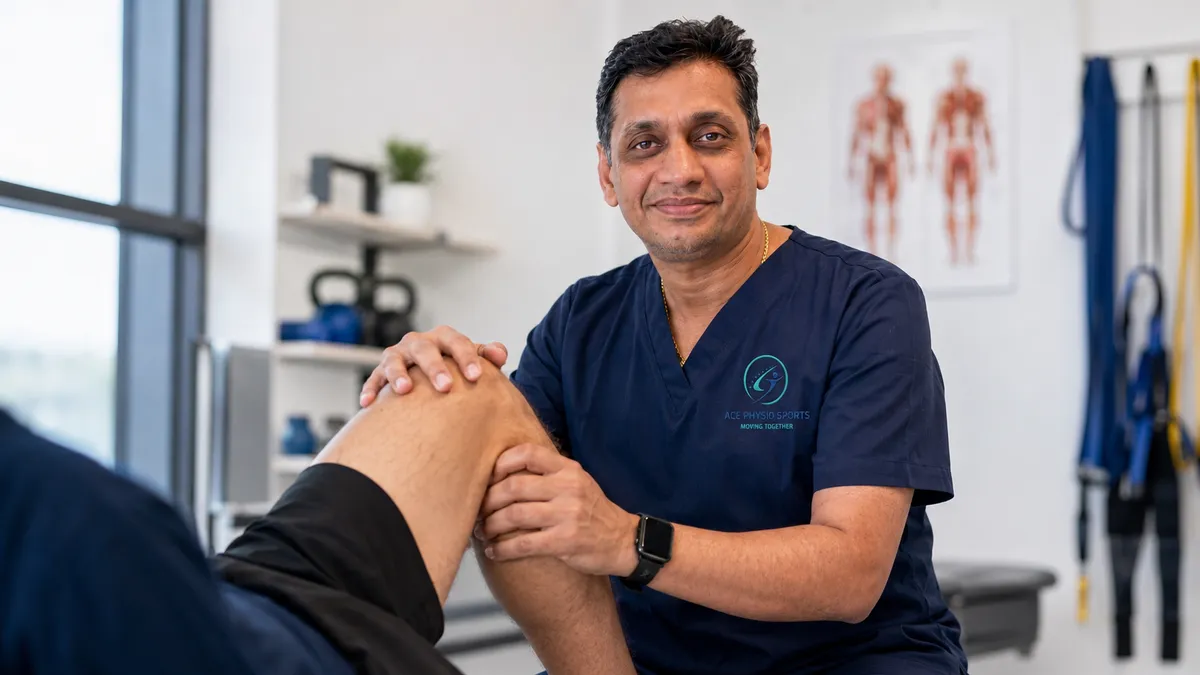
Musculoskeletal Injury Treatment in Singapore

What Is a Musculoskeletal Injury?
The musculoskeletal system is the framework your body depends on for every movement bones, muscles, tendons, ligaments, cartilage, and the nerves that coordinate them. When any part of this system is damaged, overloaded, or inflamed, the result is pain, stiffness, weakness, and loss of function. These are musculoskeletal injuries.
They are far more common than most people realise. Musculoskeletal conditions affect an estimated 1.71 billion people worldwide, making them the leading cause of disability globally according to the WHO. In Singapore, desk-based work culture, long commutes, and high participation in recreational sport mean that muscle and joint problems are among the most frequent reasons people seek physiotherapy.
What makes musculoskeletal injuries particularly tricky is that pain often appears in a different location from the actual problem. Knee pain might originate from hip weakness. Shoulder pain might stem from how you hold your neck. Numbness down the arm can come from a nerve being compressed at the cervical spine. This is why accurate diagnosis not just symptom management is the foundation of effective treatment.
Clinical insight from Vineet Bansal, Clinical Director: "Most patients come to us having treated the symptom for weeks ice, rest, pain medication without addressing why it happened. The body adapts quickly. If a muscle is not doing its job properly, another structure compensates, and that is where the next injury appears. We always assess the whole kinetic chain, not just the painful area."
Acute vs Chronic Musculoskeletal Injuries
Understanding the difference matters because the treatment approach differs significantly between the two.
Acute injuries happen suddenly a twisted ankle, a pulled hamstring, a shoulder dislocation during sport. The tissue damage is fresh, inflammation is the body's immediate response, and the focus in early treatment is on managing swelling, protecting the area from further damage, and starting gentle mobility work as soon as it is safe.
Chronic injuries develop gradually the runner who has had mild knee pain for three months, the desk worker whose neck ache has become a daily reality, the warehouse employee who keeps tweaking the same shoulder. Chronic musculoskeletal conditions often involve tissue changes like tendon degeneration, scar tissue formation, and compensatory movement patterns that have become habitual. These require a longer rehabilitation timeline and a stronger emphasis on correcting the underlying mechanics that created the problem.
Both types are treatable. The mistake is waiting too long before getting help. Research published in the BMC Musculoskeletal Disorders journal found that 68.4% of physiotherapy patients achieved clinically meaningful improvement in quality of life with the strongest outcomes in patients who started treatment early rather than after the condition had been chronic for months or years.
Musculoskeletal Conditions We Treat
Our physiotherapists are trained in diagnosing and managing a wide range of musculoskeletal conditions. Each one requires a different clinical approach, which is why a thorough initial assessment always comes first.
Muscle Strains and Tears
From Grade I micro-tears to Grade III complete ruptures, muscle injuries need graded loading and progressive strengthening not just rest. The most commonly injured muscles we treat include the hamstring, quadriceps, calf, and rotator cuff. Recovery timelines vary significantly with severity: a mild hamstring strain may take two to four weeks, while a significant tear can take three to six months of structured rehabilitation.
Ligament Sprains
Ankle sprains are the most common musculoskeletal injury we see, but knee ligament injuries (ACL, MCL, PCL), wrist sprains, and shoulder instability are also frequently treated. What most people do not realise is that pain resolution and full recovery are not the same thing. The proprioceptive nerve endings in a sprained ligament the ones that tell your brain exactly where your joint is in space take significantly longer to recover than the structural tissue itself. Skipping this phase of rehabilitation is why so many ankle and knee sprains keep recurring.
Tendinopathy and Tendonitis
Patellar tendinopathy (jumper's knee), Achilles tendinopathy, and rotator cuff tendinopathy are common in both active individuals and office workers. The current evidence strongly supports progressive tendon loading programmes not rest, not just ice and anti-inflammatories. Tendons need load to adapt and heal. We design loading programmes based on your specific tendon, its stage of pathology, and your activity demands.
Osteoarthritis and Joint Pain
Arthritis does not mean you have to accept pain as a permanent part of life. Exercise-based management reduces joint pain and stiffness, improves the nutrition of cartilage, and slows disease progression often more effectively than medication alone for mild to moderate osteoarthritis. We treat knee, hip, shoulder, and hand osteoarthritis with personalised exercise programmes and manual therapy.
Disc Injuries and Nerve Pain
Disc bulges and herniations can compress nearby nerve roots, causing referred pain, numbness, tingling, or weakness into a limb. The exact pattern of symptoms tells us which level of the spine is involved. Our approach combines spinal mobilisation, neural tissue management techniques, and targeted core rehabilitation to reduce nerve irritation and restore function. Surgery is rarely the first answer the majority of disc-related nerve pain responds well to conservative physiotherapy management.
Back and Neck Pain
Singapore's sedentary work culture makes cervical and lumbar spine pain extremely common. Two people with the same diagnosis of "lower back pain" may need completely different treatment one might have a disc injury responding better to extension-based exercises, while another has facet joint irritation that improves with flexion and manual therapy. We assess your specific movement patterns, muscle function, and posture to build a treatment plan for your spine, not a generic protocol.
Shoulder Injuries and Rotator Cuff Problems
Shoulder impingement, rotator cuff tears, and frozen shoulder (adhesive capsulitis) all present with pain and limited movement, but they require very different treatment approaches. Misidentifying one for another wastes months of rehabilitation. Our clinical assessment differentiates between these conditions clearly before treatment begins. Frozen shoulder in particular follows a natural history of three phases freezing, frozen, and thawing and the treatment strategy needs to match the current phase.
Plantar Fasciitis and Foot Pain
Heel pain that is worst in the morning after getting out of bed, or that returns after sitting for a long period, is a hallmark presentation of plantar fasciitis. Load management, progressive foot and calf strengthening, footwear assessment, and where appropriate, taping are the foundation of our approach. Most patients see meaningful improvement within six to eight weeks of consistent treatment.
Work-Related Musculoskeletal Injuries
Repetitive strain injuries, poor workstation ergonomics, and prolonged static postures are a significant source of musculoskeletal pain for Singapore's working population. We treat the injury and address the workplace factors contributing to it providing practical ergonomic guidance you can implement immediately alongside your rehabilitation programme.
Get More Information about Musculoskeletal Conditions we treat by clicking here: Musculoskeletal Conditions Treated at ACE Physio Sports
How We Treat Musculoskeletal Injuries at ACE Physio Sports
Step 1 — Comprehensive Initial Assessment
Your first session is a full clinical assessment lasting approximately 60 minutes. We take a detailed history of your injury when it started, what makes it worse, what gives relief, any previous injuries, your occupation, your sport or activity level, and your recovery goals. This is followed by a movement screen, strength testing, palpation of the affected structures, and neurological examination where relevant.
This assessment tells us not just what is injured, but why it happened the movement dysfunction, muscle imbalance, or biomechanical issue that created the vulnerability in the first place. Without understanding the cause, treatment addresses only the symptom.
Step 2 — Diagnosis and Explanation
We explain what we have found in plain language. What structure is injured, how severely, what a realistic recovery timeline looks like, what you can and cannot do during that time, and what the rehabilitation programme will involve. Informed patients recover better this is consistently supported in the research. You will leave your first session with a clear picture of your injury and a plan.
Step 3 — Hands-On Treatment
Depending on your injury, treatment in the early stages typically includes joint mobilisation to restore range of motion, soft tissue therapy to reduce muscle guarding and facilitate healing, and taping or bracing to protect the injured area. We use dry needling for appropriate presentations where the clinical evidence supports it not as a default technique.
Every session at ACE Physio Sports is one-to-one with your physiotherapist for the full duration of the appointment. You are not handed to a gym area with a sheet of exercises after five minutes of hands-on work.
Step 4 — Progressive Rehabilitation Exercise
This is where long-term recovery is built. The research is unambiguous: active exercise rehabilitation produces better outcomes than passive treatment alone for virtually all musculoskeletal conditions. Your programme is progressed in stages from pain-free basic movements, to loaded functional exercises, to sport or work-specific training.
We provide written and video instructions for your home programme, review your technique at each session, and increase load based on how your body responds not on a rigid timetable.
Step 5 — Return to Activity and Prevention
Discharge from physiotherapy is a planned milestone, not an abrupt end. Before you leave, we ensure you have the strength, mobility, and movement quality to return to your sport, your work, or your daily activities without re-injury risk. We also give you a maintenance programme and the knowledge to recognise early warning signs if symptoms begin to return.
Expert quote for pull-quote block:
"The biggest mistake I see in musculoskeletal rehabilitation is stopping treatment the moment the pain disappears. Pain is an early warning system it quiets down before the tissue has fully healed and before the movement dysfunction that caused the injury has been corrected. We discharge patients when they are genuinely ready, not when they are pain-free." — Vineet Bansal, Clinical Director, MPhty, ACE Physio Sports
When Should You See a Physiotherapist?
There is a natural tendency to wait and see if pain resolves on its own. Sometimes it does. But certain signs indicate that professional assessment is needed sooner rather than later.
Book an assessment if any of the following apply:
- Pain has not improved meaningfully after five to seven days of basic rest and self-management
- You heard or felt a pop, crack, or give-way at the moment of injury
- The joint is swollen, significantly bruised, or feels unstable
- You have numbness, pins and needles, or weakness in a limb alongside your pain
- Pain is affecting your sleep, work, or ability to carry out normal daily tasks
- This is a recurring injury the same area keeps flaring up
- You are an athlete who needs a structured, timeline-based return to sport
Important note on red flags: If musculoskeletal pain is accompanied by unexplained weight loss, night sweats, fever, or pain that does not change with movement or position, please see a medical doctor before seeking physiotherapy. These symptoms require medical investigation first.
What to Expect at Your First Appointment
Your initial session lasts approximately 60 minutes. Come wearing comfortable clothing that allows access to the area being assessed shorts for knee or hip problems, a loose top for shoulder or neck issues.
Bring any relevant imaging (X-rays, MRI reports, ultrasound scans) and a list of medications you are currently taking. If you have been referred by a doctor or specialist, bring that letter too.
By the end of your first appointment you will have a clinical diagnosis or working hypothesis, a clear explanation of what is happening and why, and an outline of the rehabilitation plan with a realistic timeline.
Why Patients Choose ACE Physio Sports for Musculoskeletal Treatment
One-to-One Every Session You see your physiotherapist for the full duration of every appointment no handoffs, no gym supervision after a brief consultation.
Evidence-Based Practice Our treatment protocols follow current clinical guidelines and peer-reviewed research. We update our practice as the evidence evolves, not based on trends or tradition.
Specialist Clinical Experience Vineet Bansal holds a Master of Physiotherapy from King's College London and a BSc (Hons) from the University of Queensland, with 20 years of musculoskeletal and sports physiotherapy experience at Tan Tock Seng Hospital, Alexandra Hospital, and Mount Elizabeth Hospital.
Diagnosis Before Treatment We identify the actual cause of your problem before beginning treatment. This determines every clinical decision that follows.
Accessible East Coast Location Located in East Gate Building on East Coast Road, conveniently accessible from Katong, Marine Parade, Bedok, Siglap, Tampines, and the wider East Singapore area.
Rated 4.9 Stars by Patients Rated 4.9 out of 5 from over 100 patient reviews. Most of our new patients come through referrals from existing patients.
Research References
- BMC Musculoskeletal Disorders — Community physiotherapy outcomes and quality of life (EQ-5D): https://www.ncbi.nlm.nih.gov/pmc/articles/PMC5655980/
- WHO Global Report on Musculoskeletal Health: https://www.who.int/news-room/fact-sheets/detail/musculoskeletal-conditions